‘We are not here for long – life is too short to be unhappy’
Kathleen Anne Miller (Kathy) was born on 27 December 1936 at a ‘birthing house’ in Geelong, where she was delivered by a midwife. She was the fourth of Gladys and Marshall Miller’s children. The family lived in Queenscliff at the time; Kathy’s father was a fisherman from a large fishing family who had fished out of Queenscliff for generations. When Kathy and her mother came home from the birthing house the family was living in a cottage on the hill overlooking Swan Bay. Later they moved to Wharf Street, in the area known as Fisherman’s Flat, then on to Swan Island where they lived in the ‘mining house’ which came with her father’s work taking mines out be loaded onto ships heading off to the Second World War. Kathy remembers her father’s family as ‘old fashioned people’ and that her grandmother ‘wore long skirts and had her hair tied up’. When Kathy was six years old the family moved to St Leonards.
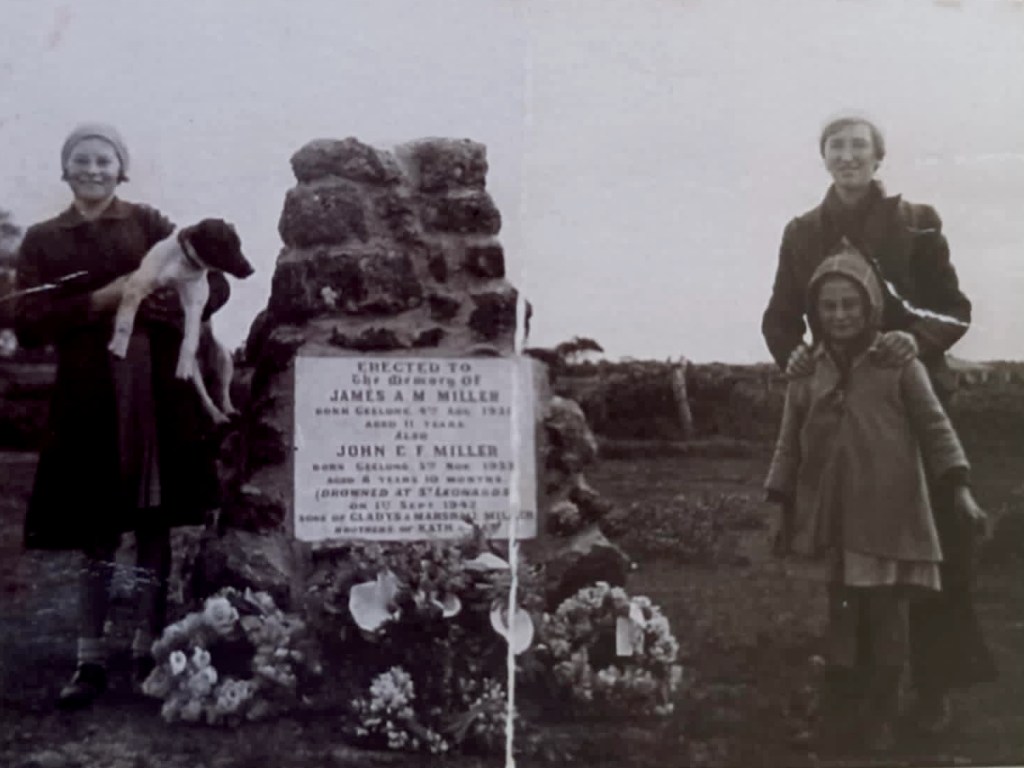
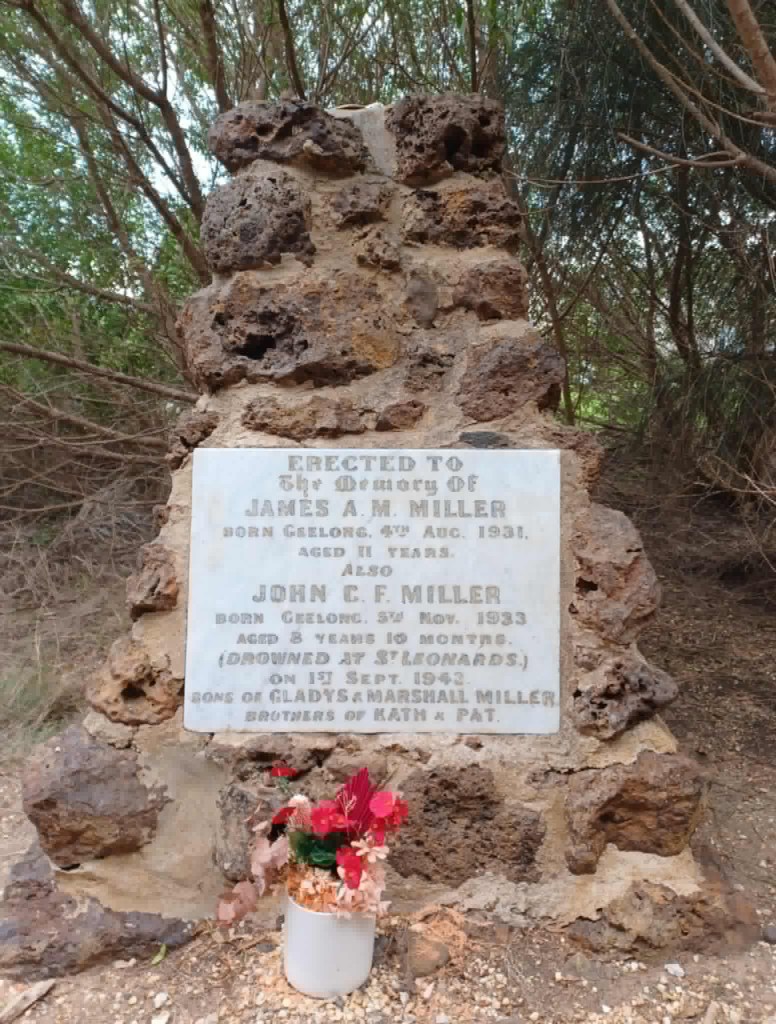
Kathy begins her story by telling of the tragic disappearance of her brothers, James Allen, known as Allen, aged eleven and John, who she called Johnny, aged eight. It was the first of September 1942 and the family – Gladys and Marshall, Kathy’s older sister Pat aged fourteen and Kathy aged six, as well as the boys – had not long moved to St Leonards. That morning, the boys had ventured out from their house above the Red Bluff to the beach below for a day of exploring. By dinner time, just as it was getting dark, they hadn’t returned home. The whole town, the fishermen and the Queenscliff lifeboat went out searching for them. Some searched for days, but no trace of the boys could be found.
It was thought the boys had taken the canvas canoe which had been left on the beach out for a paddle. The canoe washed up on the Mornington Peninsula days later. Allen and Johnny were presumed to have drowned and the coroner concluded the same. However, Kathy says their mother never believed they went in the canoe and that something else must have happened to them. She walked the beach every morning for months hoping to find something, a shoe, anything, but there was nothing. Kathy says her brothers’ disappearance ‘affected everyone and we were crying a lot for many years after’.
A stone monument to the boys was built by the community on top of the Bluff and remains there today; often with fresh flowers to remind us that they remain a part of the community and the story of St Leonards.
Kathy would experience seemingly relentless tragedy, heartbreak and hardship throughout her life. But these are only part of her story and they do not define her. There are also stories of incredible determination, a spirit of adventure and a mighty independence – traits that would appear to run strongly among the women in her family.
Patsy, as Kathy calls her older sister, left home a year or two after the boys disappeared, to live in Melbourne and then East Geelong before returning a few years later to work at the St Leonards Hotel, marry Mick Rigby, a local fisherman – ‘one of the many Rigbys in St Leonards’ and raise their five children. Kathy and Patsy lived different lives for many years, but in later life rekindled their relationship as the close sisters they once were. Patsy passed away in 2001. Her husband Mick, also a close friend of Kathy, passed away earlier this year (2026) at the age of ninety-nine.
Kathy grew up with many cousins and later came to discover she also had a number of siblings. As it turned out, Marshall Miller ‘had been married before and had six or seven kids from that marriage’.’Kathy met them when she was a teenager and they often came to visit. ‘One of the boys had a little plane and used to take us for rides.’ Kathy was to later meet Kate, Marshall’s first wife, who he left for Kathy’s mother, at Marshall’s funeral. Kathy says she was ‘really nice – a wonderful person – who always forgave Marshall for leaving’ them. In a matter-of-fact way and without bitterness Kathy describes her father as ‘a bit of a villain, and sometimes not very nice. He drank too much all his life. If the wind was blowing – and he couldn’t go out fishing – he drank; he was not nice to mum when he was drunk’. Kathy says of her childhood that ‘we were very poor and lived in some shocking houses and at one stage a tent because we had no money’. Kathy also has many fond memories of her father and loved him dearly.
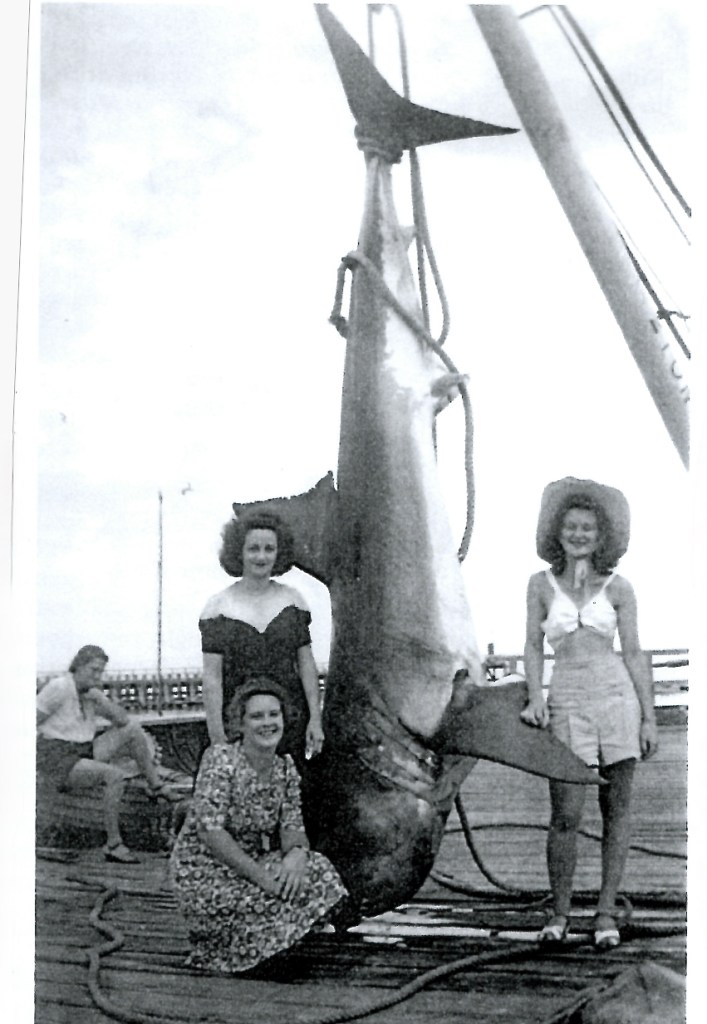
Kathy describes her father as ‘a big man and a good fisherman’ and tells the story of the time he caught an eighteen-foot White Pointer, and brought it back to the St Leonards’ Pier. This was no small effort given the fishing boats of the day were not much bigger than the shark itself. His fishing partner and son-in-law Mick Rigby wanted to cut the line but Marshall wasn’t having it. This fish was a big deal. Kathy led a procession of kids and their teacher from the school to the pier to see the shark. It was hoisted up on the crane and the whole town turned out to see it.
Kathy’s mother has quite a story of her own. At twenty-one, she travelled from England alone and found work on a sheep station, ‘which she hated’. When she wrote home to her parents asking for help to return her father refused, telling her, ‘You’ve made your bed, now you have to lie in it’. She came to the Bellarine, picked up work and picked peas for years ‘which she was really good at’. Kathy remembers her as being ‘incredibly fit’ and ‘incredibly talented; she played the violin, saxophone and trumpet and had a beautiful singing voice. Her favourite song was Danny Boy which always made her cry. She was tiny, wore men’s clothes – usually jodhpurs – and was a bit wild’.’
Kathy had to grow up quickly but somehow she still managed a lively childhood and a lot of fun with her cousins and friends, many who are still friends to this day. When she started at St Leonards Primary at age six the school only had twelve students. Her best friends were Neville and Brian Rigby, Arnold and Lynette Trewin and Julie Tims. ‘Brian, Neville and me used to make up a picnic of tea and sponge and spend the whole of a Sunday down at the Bluff. We’d walk to Billy’s Point (Edwards Point) and not come home till the end of the day. We would often swim all day down at the Pier and ride our bikes to the pictures in Portarlington – riding with no lights of course. I borrowed a boy’s bike from an old fella who was a neighbour. I buckled the wheel one time and he fixed it; he didn’t tell me off – he just fixed it and I kept borrowing it. Eventually I got my own bike’.
For a while Kathy and her parents lived in the little cottage at the back of the Billett / McNeil house across the road from the school beside the Memorial Hall. She has fond memories of this time and the little cottage. From a young age Kathy joined in the dances at the hall with her friends. ‘There were local bands, big suppers, big sponges and the women wore beautiful dresses. By the time I was thirteen or fourteen my mother wised up to the attention I was getting from boys, and, horrified to see them lined up for a kiss (a game I’d arranged) took to arriving at the front door of the hall to escort me home – next door – with a hurricane lamp in hand.’ It still draws a cheeky chuckle.
Kathy left school at age thirteen because St Leonards Primary ended at grade eight and traveling into Geelong for high school was a trip too far. At thirteen she was working weekends at the St Leonards Hotel, ‘a good little pub’, and then at the post office which was housed in The Big Store. While working in the post office, Kathy met the man who brought the dry-cleaning in and he invited her to work for him at his dry cleaners in Geelong; she promptly accepted. ‘They were long days and I often didn’t get home till after eight, having caught the bus to Portarlington and then walked home to Indented Head.’
Tragedy struck again when Kathy was fifteen. Her mother, riding Kathy’s pushbike home around dusk along the Esplanade toward Indented Head, was hit by a car; the driver didn’t stop. ‘I remember it was Easter Monday. Dad, who was on his way home from St Leonards with a friend, found her first laying at the side of the road. Soon after Patsy, Mick and their baby daughter came along on their way back from a visit. They came back to get me. She was still lying on the side of the road, still alive but barely. She was taken to hospital in Geelong and lived for another three days. We believe we know who did it; he had a big new car and had been seen hurtling around town earlier. H he left the area for good a few days later. There was not a big investigation, my father didn’t push it.’
Shortly after her mother died, Kathy left St Leonards, taking her father with her and moved into a ‘little flat’ in Geelong. She cared for her father as his health was bad after a lifetime of drinking.
Having already met her future husband Bruce Roder when she was sixteen, they married when Kathy was twenty-one and a year later their son Troy was born. For a short while Kathy, Bruce, Troy and Kathy’s father lived together in the little flat. But before long there was more heartbreak to deal with. When Kathy was just twenty-two, her father died. ‘It was really sad, he had cancer and one day just collapsed in the street.’
Meanwhile, things didn’t work out with Bruce and after two years Kathy left with Troy to work on a sheep station in Derrinellum, more than an hour away from Geelong on the Hamilton Highway. Kathy says it ‘was an awful job, but helped’ in making a new start. Although the marriage ended Kathy maintained a strong connection with Bruce’s family.
Six months later Kathy left and took up a new role as cottage mother with Sutherland Homes in Diamond Creek. At the age of twenty-eight, she was the youngest ever cottage mother, and with ten children in her care – eleven counting Troy – in a brand new home, Kathy says ‘it was a good life and I loved it’. Diamond Creek was rural in those days and ‘we had our own cows’. After four years, as many of the children had grown up and were leaving, and new children taking their place, Kathy felt it was time for her and Troy to leave too. Many of the children who were in her care for those four years- now with families of their own – still keep in touch. They consider themselves very much as family.
Kathy’s next move was to a whole new world in Papua New Guinea. This adventurous leap of faith happened when she met and fell in love with a man who lived there. But, ‘after six months or maybe a year’, Kathy found it too much; the risk of malaria was high, medical treatment was limited and she was concerned that Troy might contract the disease. He didn’t, but by the time they got back to Geelong, Kathy had.
Once recovered, Kathy became a courtesy driver with Dawson Ford. ‘It was the first job of its kind and came with a smart uniform.’ She was pretty happy with that job but also cleaned a bank at night to make ends meet.
During this time, Kathy met Peter Barling. Her criteria for a new relationship was (among other things) that he ‘needed to be a worker’. They had a daughter, Eberny, and soon after the family of four moved to Warrnambool. But ‘it didn’t work out with Peter.’ Even though the relationship with Peter ended Kathy still attends family reunions and remains very close to his family. After the break up, Kathy and the two kids moved back to St Leonards. That was forty-nine years ago, and until quite recently she has been here ever since.
After returning to St Leonards Eberny started kinder in Portarlington, Troy was working on the scallop boats and Kathy worked at the Ozone Hotel in Queenscliff and occasionally at the St Leonards Hotel. ‘In the seventies there were a lot of single women with children living in St Leonards; they were good times, and we had a lot of fun. We’d have fish and chips on the beach, and sometimes we’d party throughout the night at each others’ houses. There were parties on the beach with a fire if it was cold and sometimes someone would play music. There was always something to do and the whole community would be a part of it.’ Many locals of a certain age call her ‘Aunty Kathy‘ and many more have a story to tell about Kathy being a part of some wonderful and fun times, and some truly legendary days. She is something of a legend herself.
Eberny stayed in St Leonards with Kathy until she finished high school at Queenscliff, and then moved to Melbourne, Sydney, occasionally Queensland and back again. She ‘has always stayed close’.
Troy surfed as well as fished. Kathy proudly recalls that ‘he was a very good surfer and very good looking’. In his early twenties, like many young surfers at the time, he headed over to Nias, a well-known surfing spot off the coast of Sumatra. While there, Troy succumbed to some serious mental health conditions which continued to affect him for the rest of his life. He returned to live in Warrnambool but no longer worked or surfed and sadly late last year (2025) he passed away. Eberny made sure he was given a fine St Leonards farewell, with a gathering of old friends and a ceremony on the beach.
Kathy took up cleaning work in her sixties when she ‘got sick of working in hotels, the long hours and having to work Christmas and weekends’. She was still cleaning houses well into her eighties, until one day she fell and broke her neck. ‘I needed to use a walker after that and they wouldn’t let me drive.’
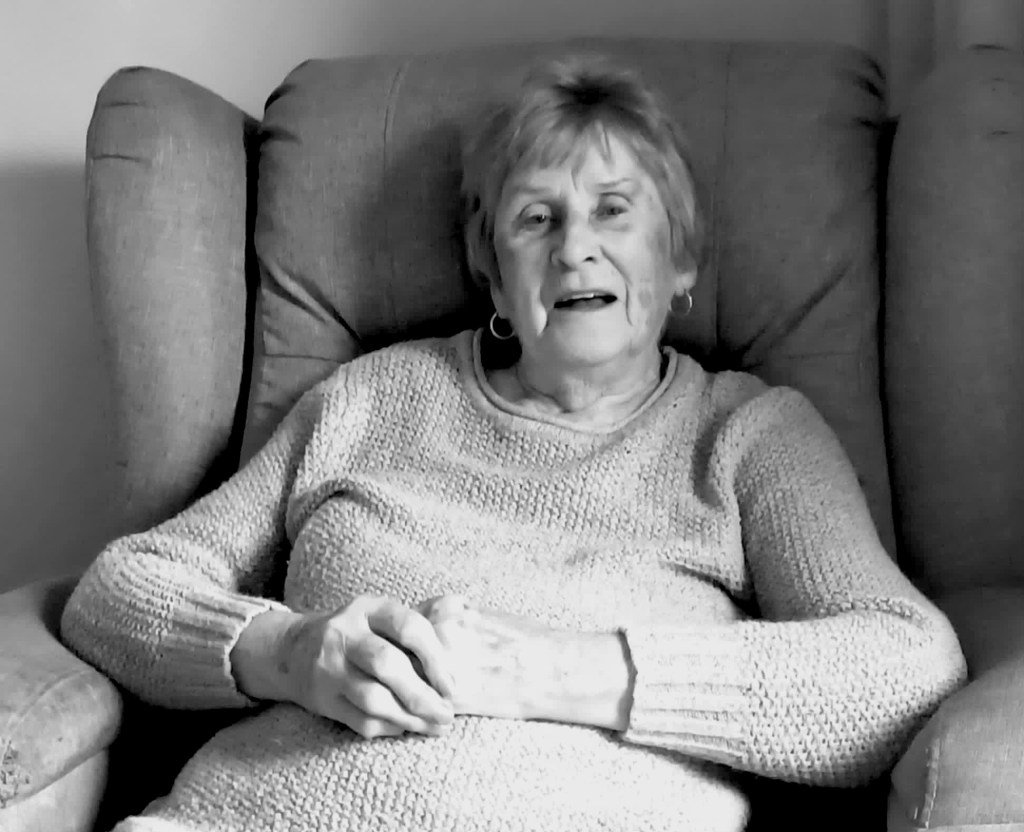
Though Kathy now lives in Arcare Pt Lonsdale, St Leonards is still, and will always be, home. ‘I love St Leonards, the beach the pier and the people. It’s a friendly little town.’ This is Kathy’s community and her stories will always be deeply embedded in the history, character and story of St Leonards. Throughout her extraordinary life Kathy has remained true to her belief that ‘life is too short to be unhappy.’
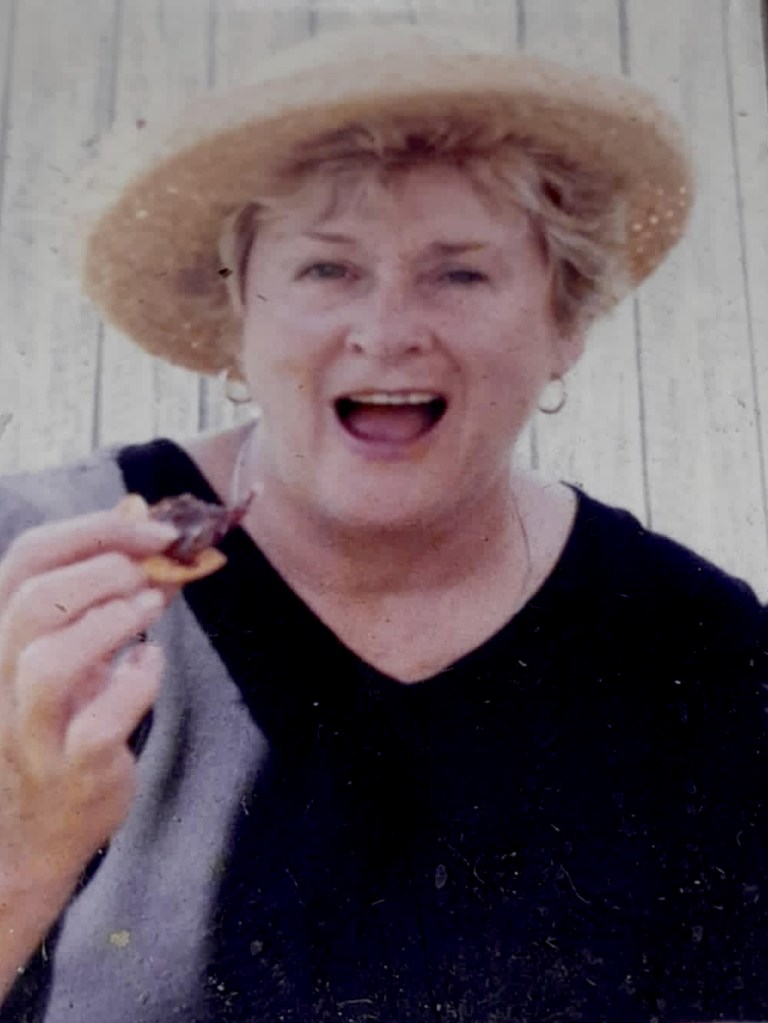
*The photos for this story have been supplied by Kathy’s family or taken from Peter M Munster’s excellent history of St Leonards publication.

