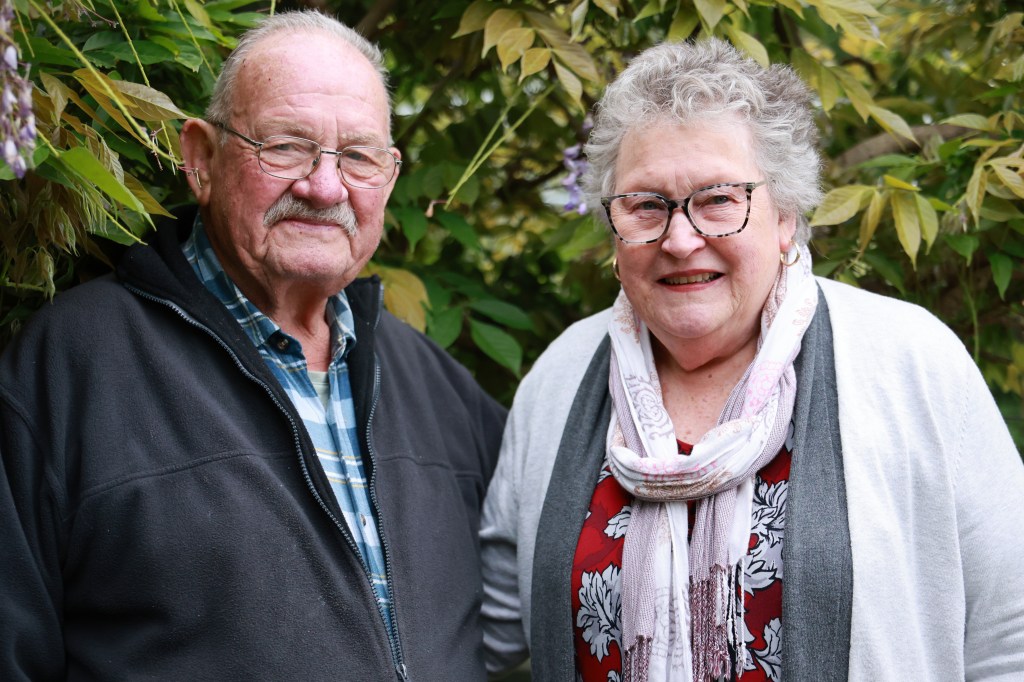
Lorna and Steve first came to St Leonards for holidays about fifty years ago, staying in the little holiday house in Clyde Avenue they bought with friends. Then, in 1986 they moved into their current home further along the Lower Bluff, which Steve built, in seven months, mostly by himself with the help of a few trades people and friends. They had moved from their other little house in North Geelong which was getting pretty crowded with their four daughters and a mother and mother in law each.
Steve and Lorna have four daughters; Sarah, Michaela, Anna and Yvette. When they first moved to St Leonards Sarah then eighteen and working stayed in Geelong but later moved to St Leonards where she has raised her two children. Anna and Yvette attended St Leonards Primary School and ‘loved it,’ while Michaela went to secondary school in Geelong, as did Anna and Yvette some years later. Growing up in St Leonards was ‘a very social time’ for the three youngest; they met friends on the bus, played netball and joined home-and-away games in tandem with the St Leonards Football team, and spent each and every summer all day at the Pier. ‘We always had a lot of kids in the house.’ Michaela, Anna and Yvette each did their Deb in hand-me-down and second hand wedding dresses, partnering with the usually ‘very scruffy’ local boys who polished up a treat. ‘They were like peacocks, you couldn’t imagine they were the same boys, they were all so lovely.’ Their dance teacher and organiser of the Deb Balls for many years was Mrs. Credlin who also ran the small grocers in St Leonards. ‘She was a very good person and did a lot for the community.’ Lorna adds that in the current era, ‘Dale and Kristie who run the newsagent and post office are a godsend to St Leonards’.
Lorna and Steve soon became involved in the wider St Leonard community. They joined the campaign to stop a proposed caravan park being built on the Lower Bluff, just as the bulldozers were rolling in, and fortunately it was successful as one can only imagine what a monumental mistake that would have been. ‘You have got to look after the environment.’ They also campaigned to stop the removal of the avenue of Cyprus trees which used to line the entrance to the town, but that was less successful. ‘The old Cyprus trees used to draw you in like a welcome – now it looks quite barren.’
Steve as he is known in Australia, but in Croatia as Stjepan, and in Italy as Stephano; was born in Croatia and came to Australia via Italy as a refugee with his family. He was sixteen when they escaped communist Croatia. Their tiny island home of Lastovo in the Adriatic Sea which had for centuries resisted no-end of circling invaders, become a communist country in 1945 following years of resistance against Nazi Germany. Life on Lostovo was already hard, but under the communist regime it had ‘become unbearable – brutal and frightening’. All five of the adult men in their extended family, including Steve’s father and uncles, were for a time imprisoned in Serbia for political reasons. On their release back to Lastovo the family made the desperate decision, though without much choice, to escape by boat, to Italy, and from there they came to Australia. The five hundred year old house Steve grew up in is still there and they have been able to visit a number of times over the years, the last in 2000 for two months.
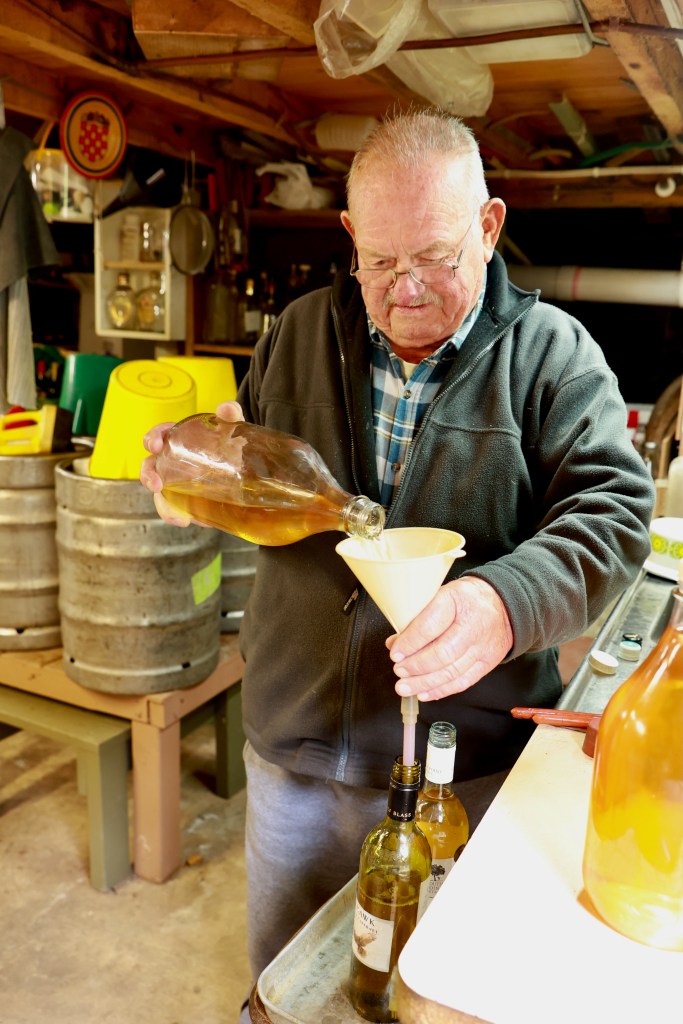
Steve proudly maintains his Croatian traditions and culture, expressed in part through his abundant ‘no chemicals and no waste’ veggie garden, wine-making, vinegar fermenting, olive preserving and fishing. ‘I live the old fashioned way – the way you are brought up.’ He learnt wine making from his father ‘from the time I was born, both red and white.’ He uses chardonnay grapes and (without a drop of editor bias) it is delicious. Steve’s love of fishing was one of the reasons they came to St Leonards.
Though coming from very different places and circumstances both Steve and Lorna arrived in Australia in 1959. Lorna came with her parents and brother in April as Ten Pound Poms though she came for free as she was considered a child at fourteen. Lorna had grown up in rural Essex, ‘a simple life with some of the post-war hardships still evident’, but there were also regular visits to the seaports and visits to Bath where her grandparents lived. ‘You miss the history and geography’ but still, ‘we thought our little house in Norlane was a palace.’ Her father worked at International Harvester and at fourteen Lorna began work at the Coles Variety Store, then at Nursery Nook for three years.

Steve, who became the eldest of four sons when his oldest brother was tragically killed in Italy, came to Australia in December of the same year with his parents and two younger brothers. They arrived as refugees and were first sent to Creswick but soon relocated to North Geelong where there was already an established Croatian community. Steve’s father worked at Fords. ‘He spoke Croatian as well as fluent Italian and Polish but not English – there was little need as he could speak at least one language with everyone he worked with’.
Both their experiences of migration and especially Steve as a refugee; leave them feeling ‘sorry for boat people. They are no different to any of us wanting or needing to come to a new country for safety and a better life for their family.’
Lorna and Steve met through the soccer club where Lorna’s brother and Steve both played. Lorna noticed Steve and thought he was ‘a bit of alright’. Then one night at the Pacific Club – a night club in the days when you couldn’t buy a drink after 6.00pm – Lorna seventeen at the time turned up to find that ‘the girls,’ musicians with the Continental Band who she usually sat with were not there. Just as she was about to leave she was invited to sit with another group, and as was destined to happen, Steve was among them.
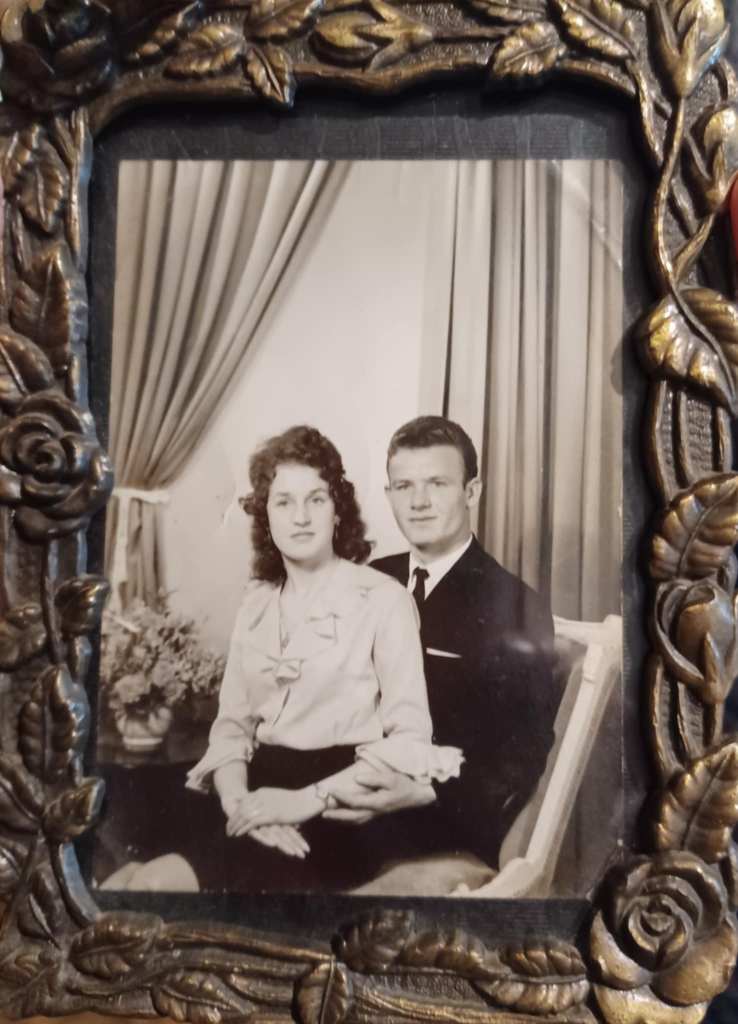
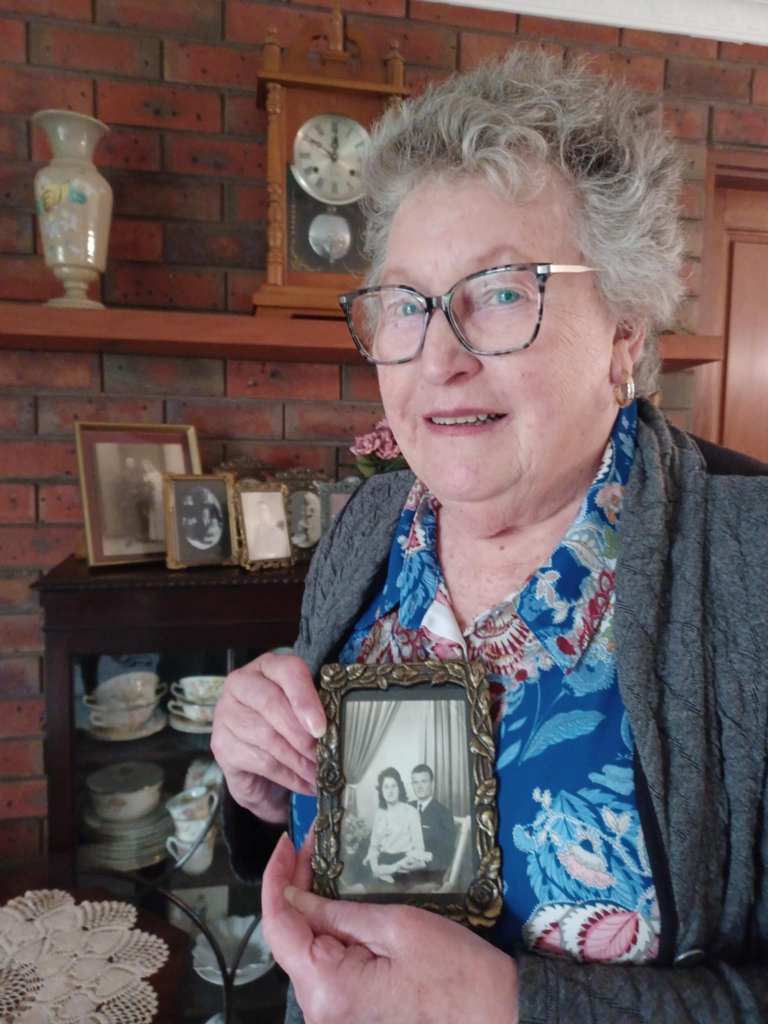
Within the year they married and moved in with Steve’s parents. Steve’s mother taught her how to cook Croatian food and to speak the language. Meanwhile Steve learned English from Lorna. They each describe their parents as ‘beautiful people. They were very accepting.’
Steve worked for many years as a painter and decorator – hanging wallpaper. He also worked on the Alcoa Pier, and shoveled wheat in the silos. ‘I worked everywhere and I’m lucky the jobs I did.’ He also built and sold houses along the way for his superannuation. And when he stopped working he was still working, adding another story to their house, digging out a cellar beneath and doing jobs for friends. His health has suffered somewhat from his years of ‘hard physical work and dusty jobs.’ Still, he keeps working. Lorna says he can ‘always be found in the shed doing something’ and his seasonal garden is magnificently productive. Then of course there is the wine to be made and olives to preserve.
Once their daughters were a little more independent, Lorna worked for council in Home Help, before retiring – if that is entirely possible when you have a close family which includes nine grandchildren, you love cooking for family and friends, and making jams and sauces, biscuits and slices.
Steve and Lorna love their life in St Leonards; they love the foreshore though Steve doesn’t get out fishing as much these days – the boat remains hopeful in the garage. Lorna and Steve describe an ‘absence of snobbery in St Leonards, and when people kept coming over time, everyone was accepted.’ Their daughters and grandchildren who they adore all live relatively nearby and they get together often. Lorna says she and Steve were ‘blessed – an accident of birth – growing up in a loving home environment.’ It’s easy to see how that loving environment has continued in their own home, and has been extended to the wider community and the world around them.
 Humans in St Leonards