Wild Waves Salty
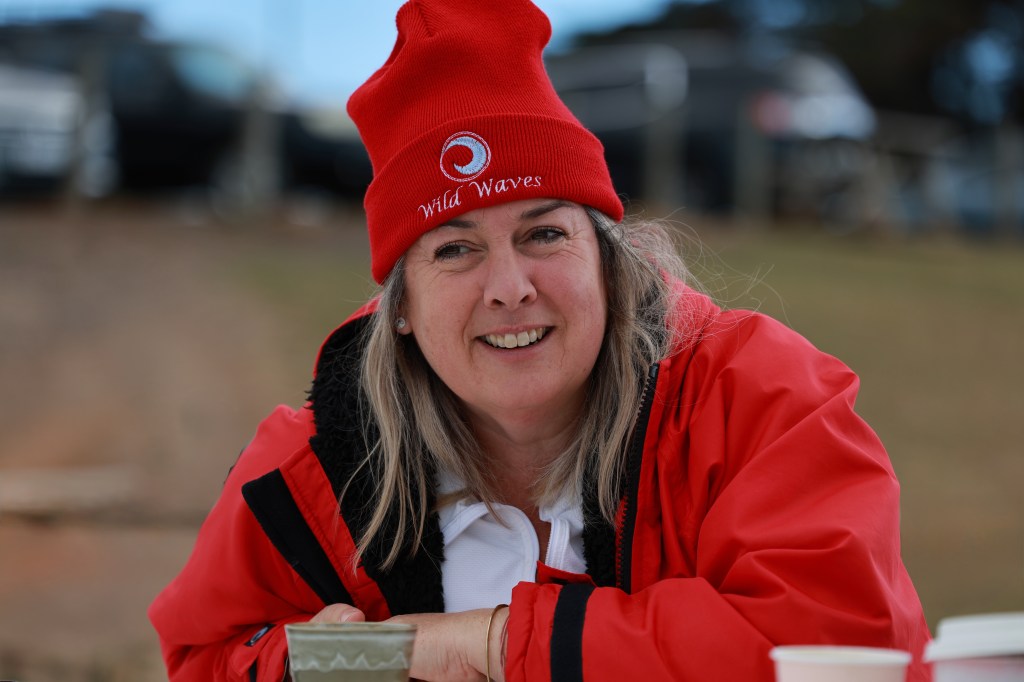
It is difficult to know where to start Lynn’s story, so the Salties as Lynn prefers to call the group of year round swimmers otherwise known as the Salty Bitches seems as good a place as any. In the end all of Lynn’s stories have the sea and more than a little bit of Irish magic connecting them.
As one of the earliest swimmers to join the group, Lynn is in her fourth winter as a Salty. She loves that people come from all over for all sorts of reasons to jump in for a swim at the crack of dawn. For Lynn, as in life, it is all about family, friends, and the connections between people. Lynn is instinctively inquisitive about people; where they come from, what brought them here, and finding a common contact, a connection. “It’s a very Irish thing” so with the Salties and in St Leonards, Lynn is right at home, or at least found a new one.
Coming out of Covid lockdowns, Lynn and her family decided to move permanently to St Leonards into the beach house they’d had for three years. Feeling a little bored, and wondering “where’s my tribe – I need my tribe” Lynn had a spiritual reading to ask that very question. She was told ‘tomorrow you will find your answer’. The next day she saw a facebook message inviting people to come and swim with the Salties who were then gathering at the St Leonards Pier. “Typical of me I didn’t take in all the information and being a Saturday, it turns out the group met at Point Lonsdale”. But she kept showing up, and very soon she found her tribe.
“When I first started it brought me back to childhood and swimming every day in the Forty Foot (beach bathing spot) at Dún Laoghaire in County Dublin Ireland. In those days swimming in winter with no wet suit, my father put Vicks on my feet, as the only barrier to the cold. I was following in the footsteps of my father John Slevin and grandfather John Slevin Senior who immersed themselves in the sea every day – it’s a huge thing over there and still is.”
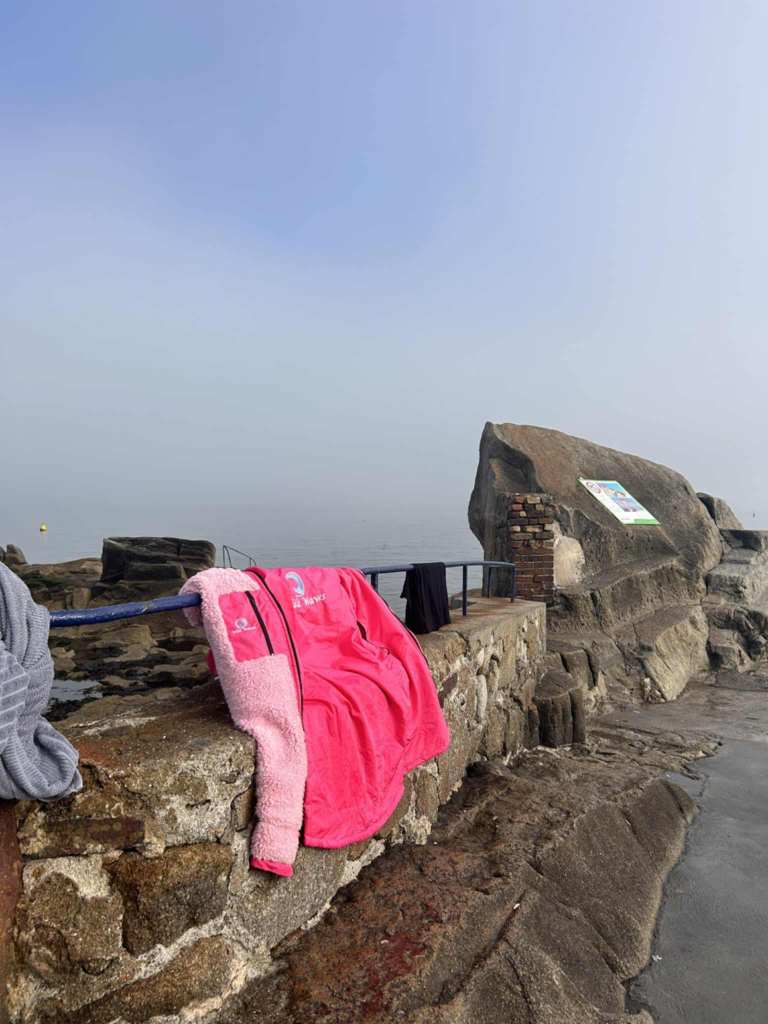
“The Forty Foot was, in the 1970’s, an all-male nude swimming spot– no women allowed – but children could go (which we agree now seems so wrong in so many ways). I was about four or five years old when I started going. It was my ‘dad time’ and I loved being in nature and the seawater. My image of the Forty Foot was that it was the most amazing, exotic, wild, invigorating and embracing place. I also caught sight of the much less amazing male anatomy after a dip in the freezing water. Looking at it now as an adult it is the most miserable spot to swim in winter – its damp and cold, your feet get stuck to the rocks. But the craic and banter lifts the soul to sunshine. Swimming is also about the banter and Christmas Day drew the biggest crowd. It was ritualistic, all shapes and sizes and creeds were there. To the Irish there is no such thing as ageism – be it a three month old baby who looks into your eyes or a ninety-nine year old – you say hello to everyone. And chatting in the sea is all part of it.”
It’s a lot like St Leonards, as Lynn has found. “People say hello to you in the street, have a chat and have got time. St Leonards also has the same ‘dirty’ beach littered with seaweed and shells and the unmistakable briny smell of the sea. I grew up eating from the sea and foraged from the land, so coming to St Leonards felt, and smelt, like my idyllic childhood back again.”
After living in some amazing parts of the world – from Ireland to New York City then Sydney – Lynn says “St Leonards is the place I feel at home.” The apple tree in the yard of house they bought in St Leonards ten years ago gives her “a sense of connection to the land”. In Ireland she explains “land is very important as along with the Gaelic language and culture it was taken from us, and only now we are getting it back.” The oldest of five Slevin children Lynn says growing up “we didn’t have a lot – yet we did have a lot, including friends and making our own adventures. My mother said there must be gypsy in me as I was always imagining going to different countries. The Celtic tribes were nomadic, being connected to the land and moving with the seasons – it’s in our nature and DNA.” True to their nature, when Lynn’s parents retired at sixty-five they moved to Australia, joining up with the four of five Slevin children who live here.
“My favourite subject at school was geography –mainly because I could look at the pictures of different places, and once I started learning French and Spanish at school, well I just had to visit. At sixteen, I went camping in France with my family and then made my way down into Spain where I worked as an Au Pair for Spanish friends of my parents, for me it was always about travel – in Europe.”
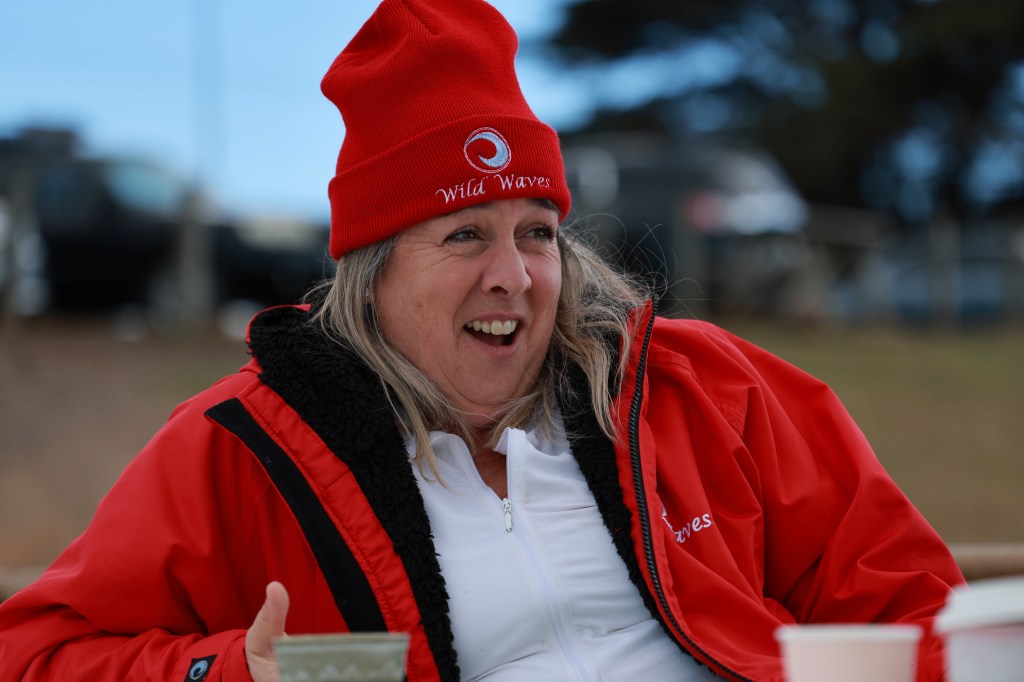
That was until at age twenty two Lynn went to New York to meet up with her boyfriend and soon-to-be husband Stephen Daly. They’d known each other since they were fourteen. “I started dating the love of my life on 8/8/1988 – I’m extremely lucky.” Steve had taken a summer job with Citibank on Wall Street and had a Green Card. Lynn went over soon after on a tourist visa to visit for a week. “As I’m not the most organised person I arrived at JFK airport customs with barely an answer to any of the basic questions like Steve’s address and phone number but was ‘astonishingly’ able to convince them that it was sufficient to know he worked at Citibank on Wall Street.” The same level of detail was offered to the taxi driver who took her to Wall Street where she spotted the ‘monster building’ that was Citibank. Steve Daly the summer holiday employee hadn’t made it to the staff list of thousands yet so getting through to him via the high security front desk was the next challenge – but remembering a scant detail prevailed and Steve was called down to meet her. For the rest of that day until Steve finished work and in the weeks following, Lynn walked through the streets of New York City, ‘feeling like she was on the set of Friends, too petrified to get on the subway and instead walking from their apartment Brooklyn Heights into Manhattan over the Brooklyn Bridge “because it felt safer.” She found out later that apparently it wasn’t safer -“a lot of people get murdered on the bridge”.
After a week’s holiday Lynn rang her parents to say she was eloping – the idea being enhanced by the realities of America’s immigration laws which requires a person to be married to someone with a Green Card in order to stay, and the prospect of getting her own Green Card likely to be some way off. As it was it took five years, during which time Lynn was not permitted to drive, work, open a bank account or leave the country as she would be allowed back in. “Being an ‘illegal alien’ in New York was incredibly isolating. Bombarded with information and advertising – always shouted – I felt I’d lost the simplicity of life, so we decided to start a family and moved to New Jersey. But everything there was highways and shopping centres, so I couldn’t go out – I had days of not speaking to anyone other than Steve.
“We had two children, Keelin and Fionán,by the time my interview for a Green Card came about. It was September 12 2001 the day after the airline hijacking and attacks against New York City and Washington DC, killing thousands of people and causing massive destruction. It was complete and utter trauma. It was our daughter’s second day at school and there were many parents who didn’t come home. I wanted to leave America. There was black dust everywhere and a terrifying atmosphere of fearing what might come next, amidst continuing threats. I needed to get the kids their freedom. I had to be dragged kicking and screaming to the green card interview – it was traumatising – there were police and army everywhere, the children were frightened and there was no communication. It felt like the end of the world. I became quite dissociated. I got my Green Card, and it would be another two almost three years before we left. By then we had three children, Keelin, Fionán and Ruairí were born in the US. My yankee kids.
“We came to Sydney for a holiday to visit my brother Ken and my sister Jill who had not long arrived. We were still in some trauma and there were many things the children had not seen before. We’d kept them even closer after 9/11 and there were many ‘normal things’ they’d not been exposed to in the States – just about everything freaked them out. They struggled to fit in, finding differences in everything, and not understanding the language – despite the fact that everyone was speaking English, which seemed even more confusing. While this time was often distressing, there was also a lighter side of things. ‘Fionán then aged five had never seen anyone smoking before and aghast would sound out the alarm in his thoroughly American accent for everyone on the street or beach to hear ‘they’re cigaretting’ which was a little embarrassing.’
At Coogee’s Clovelly Beach Lynn found “a spiritual place”. It was where the “local Aboriginal women (Bidjigal and Gadigal clans of the Eora Nation) would come to birth their babies. It was cleansing and coming from a Pagan background I felt connected to mother earth, spirit and the people. I could feel spirit when swimming and blessed in that water.” To Lynn, Australia felt like home “like Ireland – it had the same rhythm and an idea of family that made sense and felt safe, especially for children.” She explains that in the US child kidnapping was not uncommon and required elaborate prevention measures. “The hoards of guns in the average US family home and normalization of children having a gun meant Keelin and Fionán didn’t play at other children’s houses but instead their friends came to our house – dozens of them. Guns were not a thing in Ireland despite ‘the troubles.’ Fresh food was often hard to come by and it seemed very few people cooked a meal from scratch using real ingredients or had a veggie garden. Instead most people seemed to live on a diet of bought prepackaged and heated up meals” much the same as the TV dinners advertised in the 1970s.
“We stayed in Sydney for ten years and our fourth child Órlaith, the only Ozzie of the family, was born there. When Steve was made redundant we went on six holidays in six months and then faced the choice of either going back to the US, to Europe or a job in Melbourne.” The job in Melbourne won the day. But the seeds of that move were laid back in the early days of Sydney when they met their neighbours the Smiths who’d also just moved into the neighbourhood from Strathmore in Melbourne. They also had young children and together they discovered Sydney, becoming firm friends in the process. So when the decision to move to Melbourne was made, their friends said they must move to Strathmore, and stay at their holiday house in St Leonards. Both of which they did.
Ten years ago, on a Melbourne Cup weekend holiday in their friend’s St Leonards house they noticed the house over the road was for sale. They fell in love with it and bought it. For Lynn it was the apple tree in the back yard. “There’s something sacred in that tree.” Lynn said she felt she finally felt she had roots “to grow out of my feet and this was a place to stay.” They eventually knocked down the old house and built a new one, but kept the apple tree. Lynn says she feels more settled than ever in this place and in St Leonards.
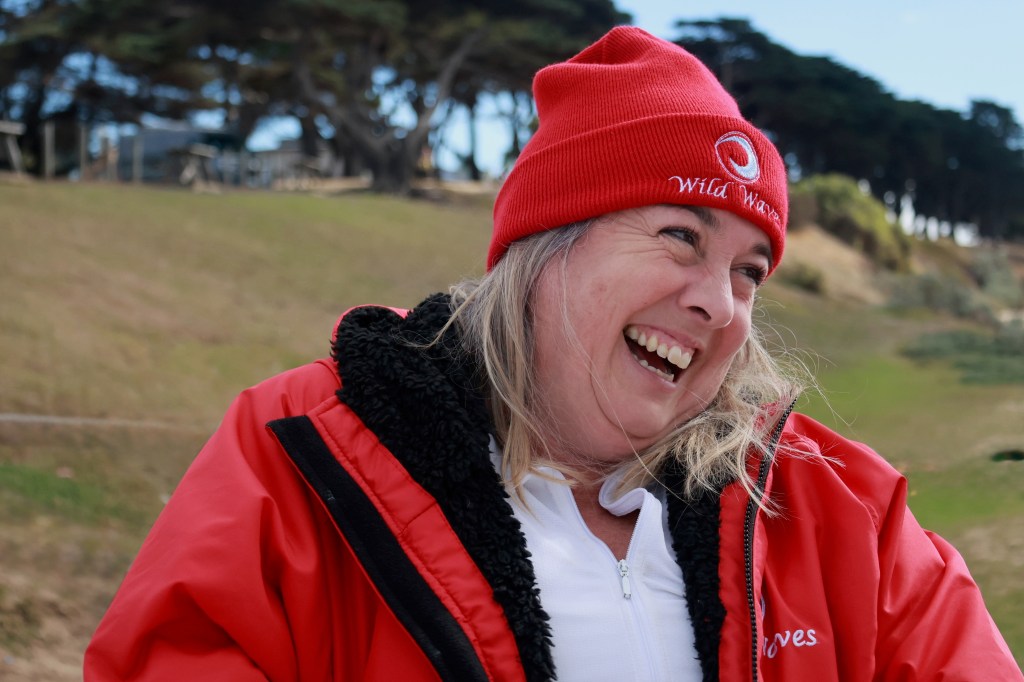
It was swimming with the Salties and coming into yet another winter when Lynn starting looking for a warm winter jacket to wear on those freezing mornings. Something warm to wear over your bathers heading down to the water and thrown back on after getting out of the water when the cold wet bathers come off. When nothing was quite fitting the bill, it was family connections and connections to Ireland that gave the answer. Lynn’s brother in Sydney is good friends with Karen Johnston who owns an Irish uniform company and created Wild Waves. “Karen is married to a fisherman who knows a thing or two about wild seas and cold weather up in Kilibegs Co Donegal the north west of Ireland. It’s bloody cold up there – wet and windy.” Karen designed the Wild Waves jackets and Lynn saw the need for them here too. The name was inspired by the Wild Atlantic Way, the 1600 mile roadalong the west coast of Ireland. The jackets make sense of the saying Lynn’s dad had that ‘there is no such thing as bad weather – just the wrong clothing.’ For Lynn Wild Waves is about ‘connecting to people and making them feel hugged and happy; allowing people to embrace the water and the outdoors knowing they are safe and warm’. The bright colors are also ‘a safety thing’ great on a foggy morning when trying to find your children and your swimming tribe. “If it wasn’t for the Salties I wouldn’t have pursued Wild Waves. They gave me the support and confidence to give it a go. I love the chats and laughs that I have with the Salties on land and in the water they are a wonderful tribe of people and we start the day on a high while most people are still in the beds.”
Website https://wildwaves.au
 Humans in St Leonards