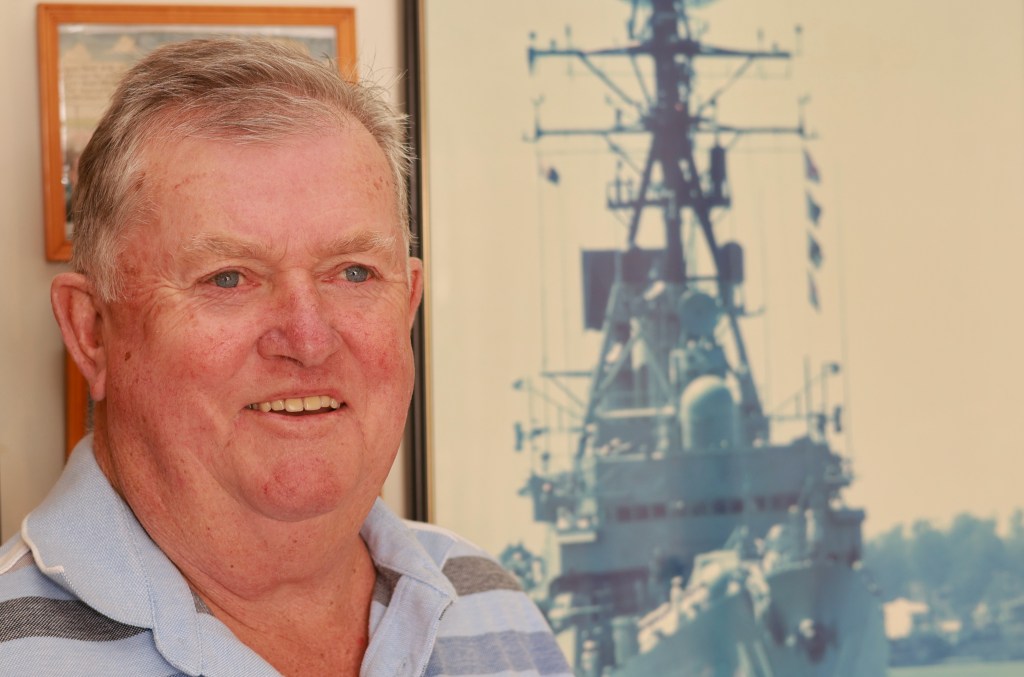
John Rowe – sailor, Vietnam Veteran, cook, golfer and proud grandfather
John has lived in St Leonards for twenty five years. He was born in Geelong West, the middle of seven kids. He went to St Pats Primary School, and later to St Mary’s Tech.He says his mother was very strict and his father was usually busy working six to seven days a week.
John ‘wasn’t interested in school’ and after turning fourteen on a Sunday, he started work on Monday as an apprentice plasterer and tiler. During the time of his apprenticeship he ‘was getting into a bit of mischief around town’ so when his cousin who was in the Navy encouraged him to join, his father said ‘give me the paperwork’ and signed immediately. John was seventeen years old. Conscription to National Service was highly likely for young men between the ages of eighteen and twenty at the time, John just got in first. Going into service was not an unfamiliar concept in John’s family. Apart from his cousin, his father was in the Army during WW2, as were three uncles, with another in the Airforce and one in the Navy.
John first went to the HMAS Cerberus Naval Base for three months of recruit training and from there he was sent to Sydney and assigned to HMAS Melbourne. HMAS Melbourne was a ship with a history of disastrous collisions but John said he experienced only a couple of ‘mishaps’. He said they were ‘on the move a lot’, on both land and sea, and while many wanted to stay on land, he preferred being at sea.
He had been in the Navy for eighteen months, and by now twenty years old, when he was drafted as a cook to HMAS Sydney, a retired aircraft carrier, which was used for transporting equipment and infantry battalions to and from Vietnam. John made two of these trips on the Sydney, the first in 1968.
John had completed a three month cooks course while at Cerberus (he topped the course) but can’t remember why he went into cooking. As it turned out cooking would be his career until retirement, though not all of it in the Navy – more on this later.
He was on shore patrol for one year, based with HMAS Penguin in NSW before being drafted to HMAS Brisbane. John explains that there’s no application process involved here ‘you just get told.’ For the next six months they were at Jervis Bay doing exercises, essentially ‘playing war games’ during the week and at the weekend they would ‘race back’ to Sydney to get into dock first and begin the weekend leave.
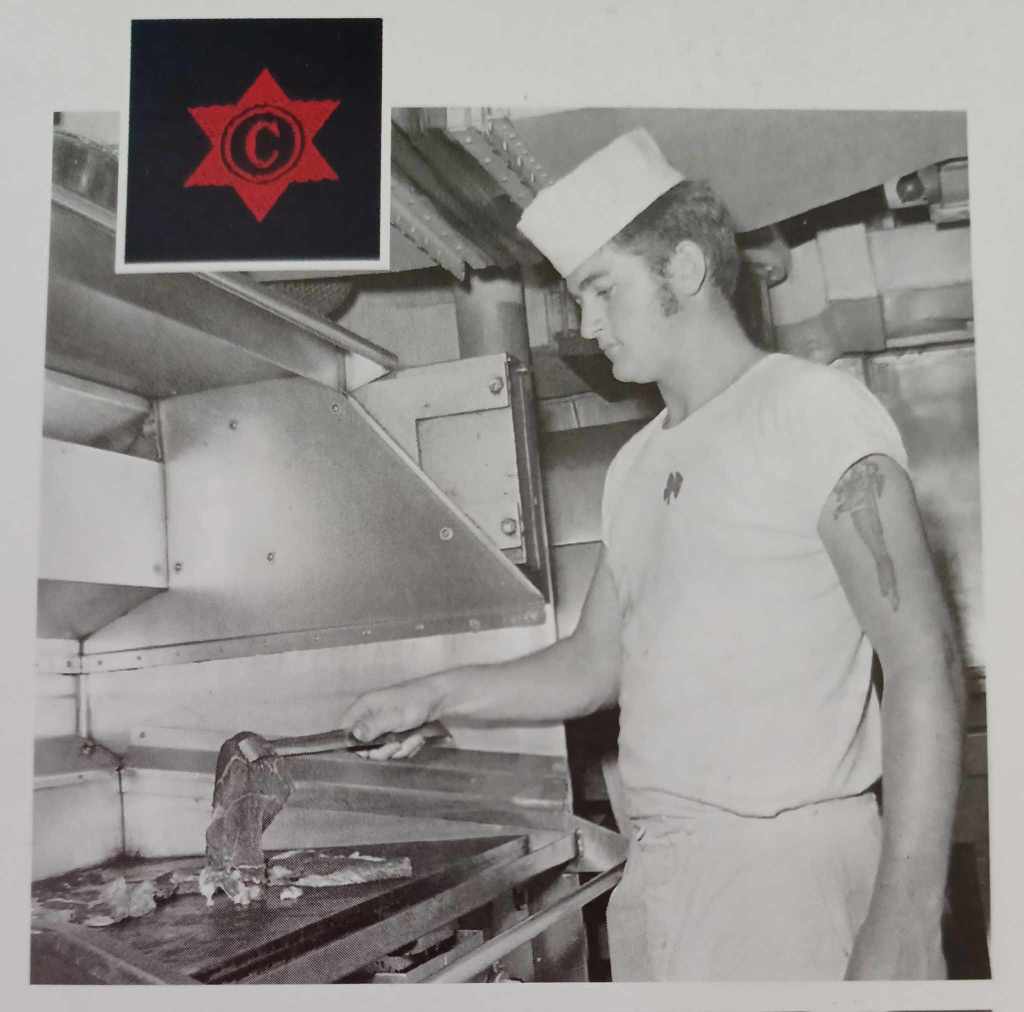
In 1971 John left for Vietnam on the Brisbane, where they would be stationed at various points ‘on the gunline’ off the coast. Their task was to fire ‘massive shells’ into the jungle, targeting Viet Cong supply routes and camps, in support of Australian and Allied forces on the ground. Being ‘on the gunline’ he says was ‘hard work’. For thirteen weeks straight, they worked shifts of eight hours on and eight off; the eight off if during the day rarely happened. It was difficult to take a rest in the cramped living conditions, with the booming noise above even if there weren’t other duties like refueling and resupply to attend to. There were times when you ‘didn’t sleep for days; you were on all the time, it was flat out’.
Leave, for R&R as well as ship repairs, was taken for a week at a time at either the American Subic Bay base in the Philippines, or bases in Singapore and Hong Kong. Time ashore could also be intense; there were ten to fifteen thousand people at the Subic Bay base, and there was money to spend, mostly on ‘grog’ which meant ‘getting wasted’ pretty quickly. In December 1972 Australia declared an end to its combat role in Vietnam.
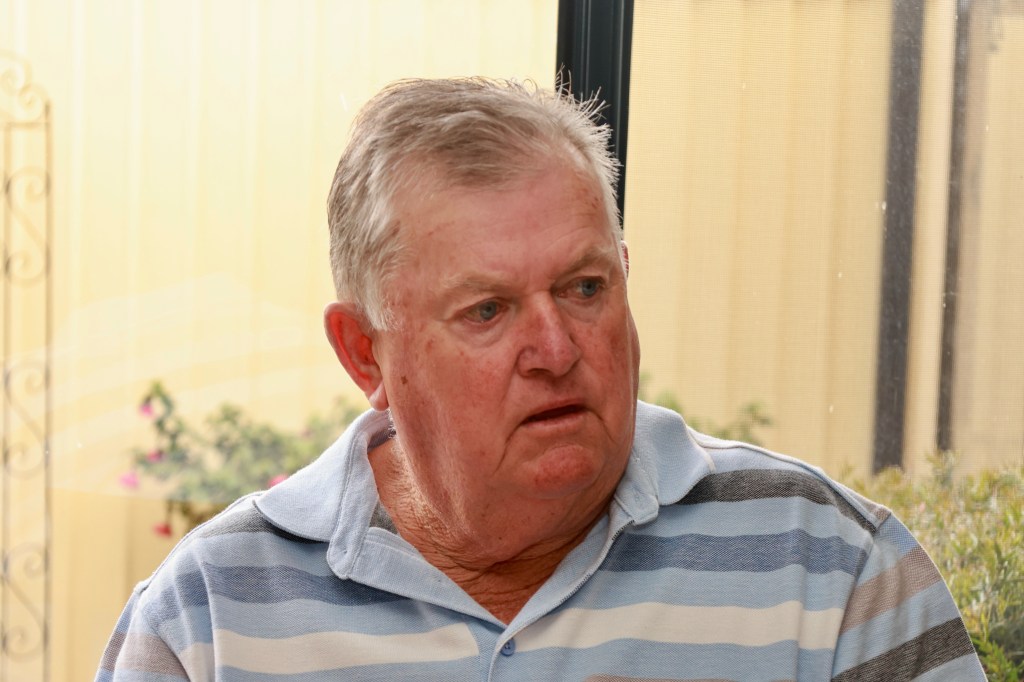
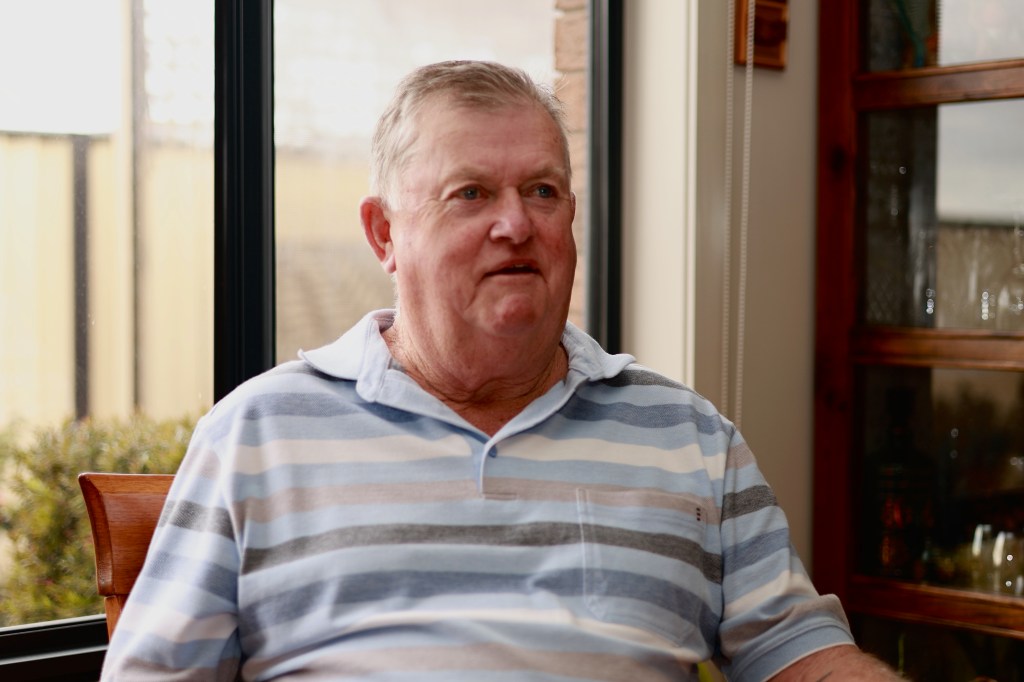
In 1976, after nine years in the Navy, John felt he’d ‘done enough’ and returned to Cerberus for a few months, then home. He left the Navy on a Friday, and started work (you guessed it) on Monday, in catering at the Ford factory in Geelong. He worked from 7.30 a.m. to 4.00 p.m. serving meals for up to a thousand workers each sitting. Friday nights, Saturday and Sunday he worked at the Checkmate restaurant. ‘Working seven days a week and keeping busy helped adjusting back to civilian life’. A couple of years later he gave up the Ford’s job and continued to work at Checkmate until retirement. Now he does the cooking at home, often in mass quantities, and shares the extra around the neighbourhood.
John says ‘it took a long time to adjust back to civilian life, some did and some didn’t.’ He learnt to ‘shut off’ from the protests and objections to the war and the images of seeing people get shot, but the war ‘was always at the back of your mind’. ‘A lot of blokes didn’t want to be associated with it’ and some disappeared altogether, not wanting to be contacted. John explains that in the early days he gave up going to the ANZAC marches because of the public abuse, and it didn’t help that for some time, not even the RSL would accept the Vietnam Veterans. It was a ‘very different experience for Vietnam Veterans from other returned service people’. John says of his first ten years at home, he was ‘disappointed and a bit more’.
It was not until 1987 that the Vietnam Veterans received a welcome home parade. Vietnam Veterans’ Day, commemorated annually on 18 August is still a relatively recent event. John attended the first in Geelong, but he said it wasn’t a particularly great start and ‘many still felt let down by the RSL, though the eventual recognition has been good’. John has marched in Portarlington for the last five or six ANZAC Days. His grandchildren and great grandchildren come along too; and most recently he saw his four year old grandson ‘transfixed by it all’; this is what really makes John feel proud.
For John it was a reunion of the crew of the Brisbane in Queensland, ten years after the war ended, that he said finally started to settle back. There was also a Dawn Service in Torquay that he found incredibly moving. He became involved with a Vietnam Veteran founded volunteer organisation in Geelong, undertaking training to assist other veterans to access psychological and other support and a pension. This also meant participating in counselling, which John said he found difficult as it can ‘brings back too many memories’. He says a lot of the veterans gave it up.
Keeping in touch with each of a group of eight friends from the Vietnam days, is what matters most to John. There are surprises, tears and laughs, and funny stories, many of them. Like trying to count the number of jabs they’d had for typhoid and anything else going whenever they came ashore on leave; the rugby games, which New Zealand always won; and the cheap American cigarette’s he’d been sending home for later – only to find they’d all been smoked by ‘no-one’ in the family. ‘It’s important to have a laugh about it’. They don’t talk about the ‘bad or serious stuff,’ though you keep remembering, and this is what works for them.
John and his wife Jacqui moved to St Leonards twenty five years ago. First building a house on the Lower Bluff, which when sold gave them enough to buy a block and build in the then new Seachange Estate. John loves the neighbourhood, going to the Ocean Grove pool for exercise on his ‘dodgy back’, and playing golf at Portarlington, often, and keeping up with his ‘Sea Vietnam Veteran’ mates.
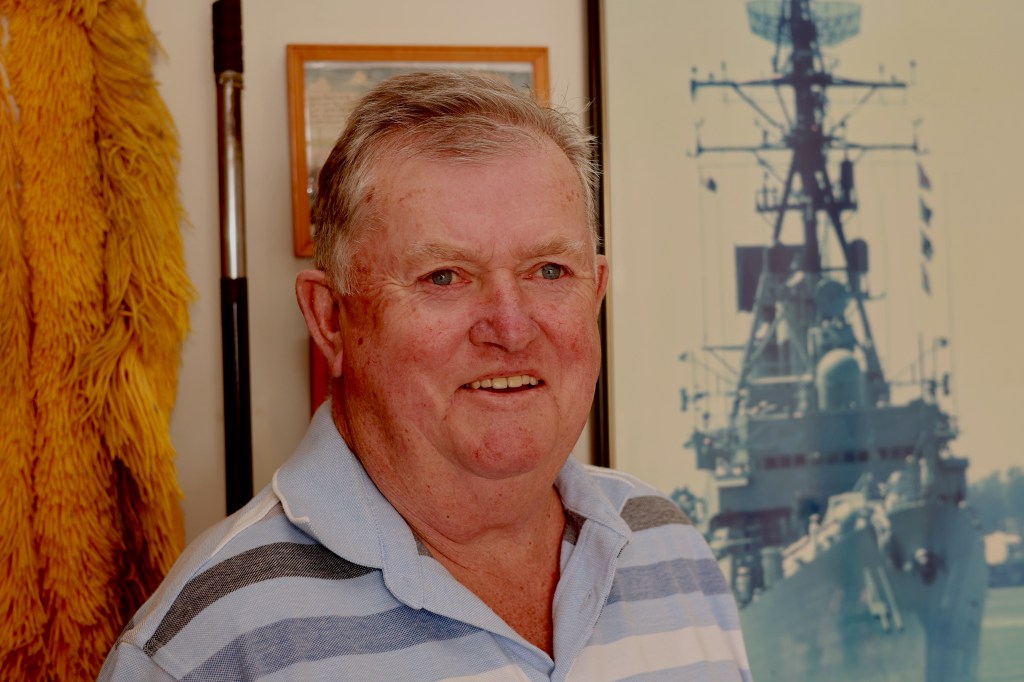
Thanks for taking the time to talk to us John. It was an honour for us to hear your story.
 Humans in St Leonards